

Since we published our first Industry Report in Spring 2025 and announced that we had mapped 25,495 agencies across the UK, one of the most common questions we still receive remains deceptively simple: ‘How many agencies are there?’ And yet, behind this most straightforward of questions lies a far more complex story about how we define, classify and understand the UK agency sector. As the government’s Industrial Strategy identifies creative industries as a priority growth sector, understanding agency capabilities and specialisms is increasingly crucial for policymakers, investors and businesses alike. And for anyone looking to find an agency, our comprehensive and detailed mapping makes it far more likely you’ll get the right match.
The headline figure back in March represented the culmination of the most comprehensive mapping exercise ever undertaken in the UK marketing, advertising, creative and media agency sector. But this number is far from static. Each month since then we have updated our database by adding newly formed agencies and companies that have moved into the agency space, while removing those that are no longer in business due to acquisitions, mergers and liquidations. We also continuously refresh our financial and growth data based on new Companies House submissions available through our partners at The Data City. This approach ensures that our data and our agency lists reflect the constantly evolving nature of the sector.
How do we actually map the UK agency sector?
The challenge of mapping more than 25,000 agencies extends far beyond simply finding and counting them. Working with our partners at The Data City we moved beyond standard company classifications that often lump diverse businesses into broad, unhelpful categories that fail to capture the nuanced nature of agency work.
Instead, we trained The Data City’s machine-learning platform to identify and classify agencies based on what they actually do and who they do it for. This creates a taxonomy that reflects the genuine diversity of the agency community. The Data City platform pulls together information from Companies House, Creditsafe, Dealroom.co, Lightcast, Innovate UK, 360 Giving and other sources, offering financial records, investment data, growth measures and company intelligence.
Our proprietary classification system sits on top of this foundation, enabling us to identify trends across specialisms and regions. More importantly for those seeking specific agencies, it allows us to create bespoke lists that match precise requirements – whether that’s agencies with B-Corp status, women-led businesses, companies with clear ESG commitments or any combination of criteria that go far beyond size and location.
The filtering process combines our specialism taxonomy with keyword searches across full agency website text, helping identify businesses with niche capabilities that might not fit neatly into predefined categories. We can search across the full database of every company in the country if needed, but crucially, every agency on a final list has been manually checked by people who understand the sector.
Why does classification complexity matter for the sector?
When we created our classification system, we recognised that the agency sector’s complexity demanded more than a strictly hierarchical approach. What emerged was a framework of 29 specialisms that cluster into seven subsectors. This structure acknowledges a crucial reality: many agencies appear across multiple specialisms, reflecting the diversity of service combinations and capabilities that characterise modern agency work.
The seven subsector clusters reveal the breadth of the contemporary agency landscape, as of December 2025:
Communications encompasses internal communications and employee engagement, influencer services, PR and communications, social media, and translation and localisation, representing 4,956 agencies across these specialisms.
Creative and Content includes content creation, copywriting, creative and advertising, design and branding, and video and production, covering 8,257 agencies.
Digital and Technology represents the sector’s largest cluster with 12,533 agencies across Amazon/Marketplace services, digital strategy, digital product design, digital transformation, e-commerce, and website and UX/UI design.
Integrated and Full Service agencies, offering comprehensive service portfolios, number 2,283.
Marketing Channels comprises customer experience (CX), direct marketing, experiential and events, and media agencies, totalling 1,875.
Performance and Analytics covers conversion optimisation, data and marketing analytics, search and performance, and SEO, representing 3,976 agencies.
Strategy and Research includes behavioural research and behaviour change, brand strategy, and market research, with 1,048 agencies.
Additionally, Social purpose and sustainability operates as a distinct specialism with 210 agencies, reflecting a niche market segment that cuts across traditional service boundaries.
Specialism, size and finding the right agency
Within these seven subsectors we can create agency lists for analysis or to find an agency based on agency specialisms and a number of different metrics including growth rate, financial data and geographic location. For those who are seeking agencies for acquisition, partnership or service provision, often the most useful way of filtering the list and finding the right companies is by agency size, as measured by the number of employees.
Here’s how the agency sector breaks down by specialism, agency size and number of companies as of December 2025, and remember: an individual agency can appear in more than one of our specialism lists depending on what they do and who they do it for:
| Specialism | 0–2 | 3–10 | 11–20 | 21–50 | 51–100 | 101–150 | 150+ | Total |
|---|---|---|---|---|---|---|---|---|
| Amazon/Marketplace | 92 | 26 | 14 | 19 | 4 | 0 | 2 | 157 |
| Behavioural research and behaviour change | 58 | 26 | 18 | 9 | 2 | 1 | 2 | 116 |
| Brand strategy | 131 | 44 | 24 | 20 | 3 | 0 | 2 | 224 |
| Content | 601 | 279 | 129 | 108 | 34 | 9 | 14 | 1174 |
| Conversion | 50 | 28 | 11 | 13 | 8 | 0 | 0 | 110 |
| Copywriting | 394 | 53 | 14 | 8 | 1 | 0 | 0 | 470 |
| Creative and advertising | 316 | 142 | 83 | 101 | 48 | 20 | 48 | 758 |
| Customer Experience (CX) | 102 | 39 | 18 | 24 | 11 | 5 | 7 | 206 |
| Data and marketing analytics | 249 | 75 | 33 | 53 | 43 | 14 | 23 | 490 |
| Design and branding | 3231 | 1150 | 314 | 187 | 42 | 8 | 17 | 4949 |
| Digital | 3474 | 1241 | 427 | 336 | 83 | 24 | 36 | 5621 |
| Digital product design | 1466 | 353 | 151 | 127 | 50 | 21 | 19 | 2187 |
| Digital transformation | 383 | 147 | 65 | 66 | 40 | 15 | 37 | 753 |
| Direct marketing | 206 | 99 | 41 | 39 | 11 | 5 | 7 | 408 |
| E-commerce | 415 | 180 | 86 | 60 | 15 | 4 | 4 | 764 |
| Experiential and events | 363 | 157 | 69 | 77 | 25 | 5 | 22 | 718 |
| Influencer | 145 | 67 | 29 | 24 | 7 | 9 | 4 | 285 |
| Integrated and full service | 1180 | 578 | 220 | 201 | 54 | 18 | 32 | 2283 |
| Internal communications and employee engagement | 80 | 30 | 10 | 14 | 3 | 0 | 1 | 138 |
| Market research | 474 | 156 | 61 | 51 | 19 | 8 | 16 | 785 |
| Media | 297 | 114 | 42 | 55 | 31 | 10 | 46 | 595 |
| PR and communications | 1621 | 612 | 228 | 219 | 68 | 22 | 32 | 2802 |
| Search and performance | 974 | 353 | 157 | 172 | 52 | 14 | 22 | 1744 |
| SEO | 1924 | 516 | 135 | 116 | 30 | 6 | 6 | 2733 |
| Social media | 1073 | 381 | 126 | 130 | 27 | 11 | 11 | 1759 |
| Social purpose and sustainability | 84 | 47 | 35 | 31 | 8 | 4 | 1 | 210 |
| Translation and localisation | 381 | 113 | 22 | 23 | 14 | 4 | 5 | 562 |
| Video and production | 1384 | 466 | 123 | 74 | 10 | 12 | 9 | 2078 |
| Website and UX/UI design | 6179 | 1643 | 408 | 227 | 41 | 12 | 4 | 8514 |
The data reveals fascinating patterns about how different specialisms scale and where opportunities might lie for both agencies and those seeking to work with them.
The agency landscape demonstrates a pronounced small-business character across most specialisms. Website and UX/UI design, the largest single specialism, includes 6,179 agencies with 0-2 employees compared to just 4 agencies with 150+ employees. This pattern suggests both the accessibility of digital services and the potential for significant consolidation in the space.
Creative and advertising shows a different distribution, with more agencies achieving medium scale. This indicates the infrastructure requirements and client relationships necessary for traditional creative work. Emerging specialisms reveal distinct characteristics. Amazon/Marketplace agencies, despite being one of the fastest-growing areas, remain predominantly small-scale. This suggests either a sector still in rapid development or one where smaller, specialised operations can effectively compete with larger players.
The data also highlights where scale brings advantages. Media agencies show 46 agencies with 150+ employees, reflecting the capital and relationships required for media buying and planning. Similarly, integrated and full service agencies demonstrate a more even distribution across size categories, suggesting that comprehensive service delivery benefits from scale.
How does detailed data transform agency discovery?
While clustering proves valuable for sector analysis, the real power of comprehensive mapping lies in its flexibility. Through keyword searches across full website text, we can identify agencies offering specific services that might span multiple clusters. This capability transforms how clients can discover agencies with precisely the right capabilities, and means that our Find an Agency lists are individually specialised and custom-built before being manually verified by our team of experts to meet our clients’ requirements.
Recent keyword searches illustrate the granular possibilities:
| Keyword search example | No. of agencies |
|---|---|
| agile methodology | 345 |
| AI powered chatbots | 146 |
| audio production | 144 |
| brand positioning | 2,244 |
| cyber | 2,154 |
| hospitality | 3,591 |
| martech | 513 |
| pet | 1,197 |
| shopify | 3,042 |
| website localisation | 977 |
This approach is not only useful for those looking to find an agency, but proves particularly valuable as the UK’s Industrial Strategy emphasises the creative industries’ role in economic growth. Policymakers seeking to understand regional creative capabilities, investors evaluating market opportunities and businesses requiring specific expertise can access intelligence that goes far beyond basic company directories.
Using our mapping to navigate the agency landscape
The sophistication of modern agency mapping creates new possibilities for how we think about sector navigation. Rather than relying on personal networks, industry reputation or geographical proximity, clients can now identify agencies based on proven capabilities, growth patterns, financial stability and cultural fit.
So for example, if you’re looking for an award-winning PR agency with a social conscience, based in Manchester with 4-6 employees who specialise in travel and say “We are different”, we can find them for you.*
Or if you want a list of every digital agency in the country, we can do that too.
And for agencies themselves, this comprehensive mapping raises important questions about positioning and discoverability. If sophisticated data mapping and keyword searches can identify your business, the same capabilities that help clients find you can also reveal gaps in how you communicate your expertise. The agencies that articulate their value most clearly, and not through industry jargon but through the language their ideal clients actually use, become the most discoverable.
Our comprehensive mapping transforms abstract sector discussions into concrete intelligence about capabilities, opportunities and trends. Whether you’re seeking acquisition targets, partnership opportunities or simply trying to understand how the sector is evolving, the move from basic company counts to sophisticated agency intelligence represents a fundamental shift in how we can navigate this complex and vital industry.
If you would like a bespoke list of agencies to meet your own needs for business-to-business, M&A, partnerships or marketing purposes, please contact Tom at tom@agencybyagency.com or complete our online form for a quote.
* In case you were wondering, it’s Sway PR
Photo by Markus Krisetya on Unsplash
Latest articles and reports
View all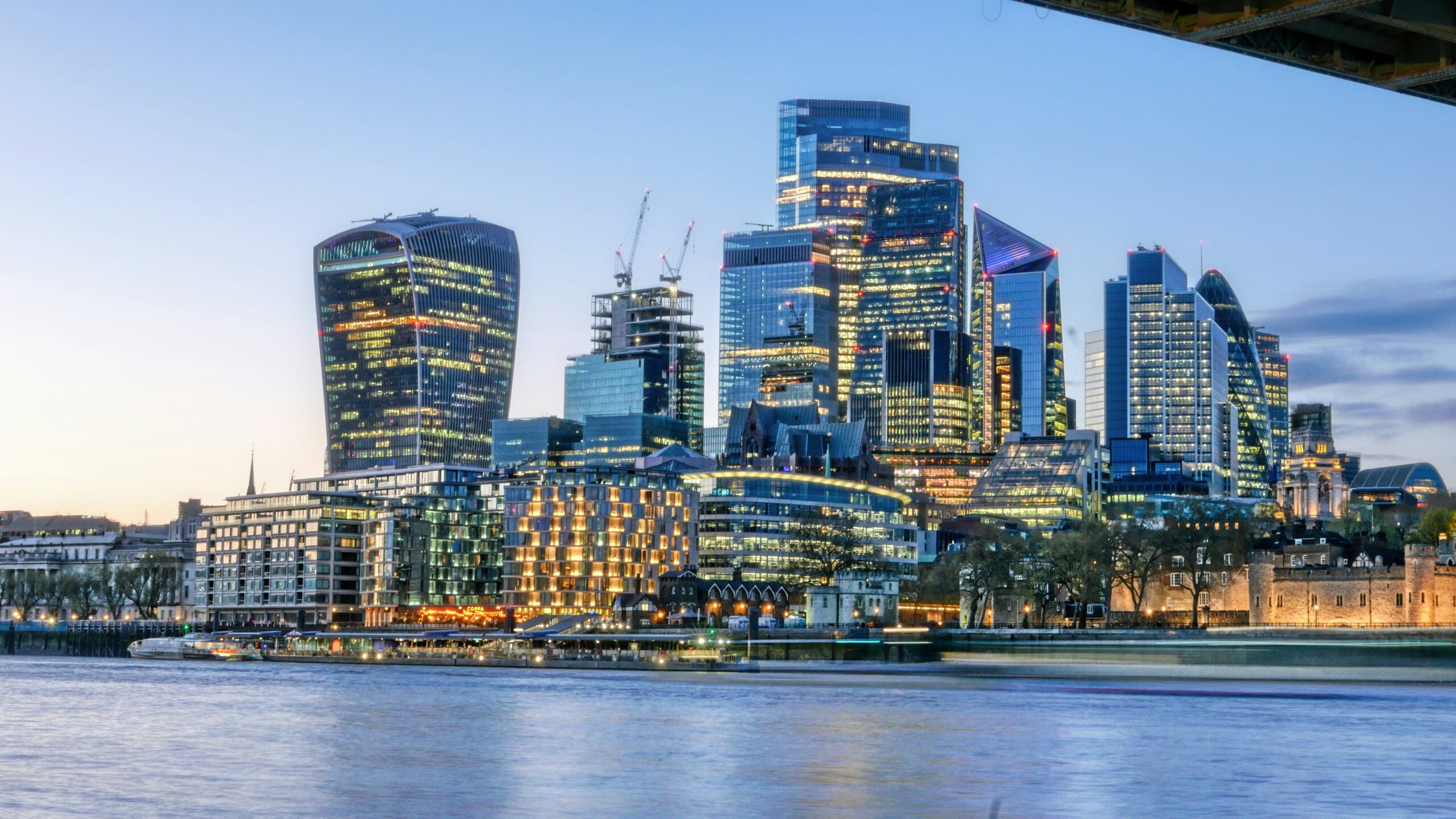
- Report
High growth agencies: what sets the sector’s fastest risers apart?
Our latest report takes a more detailed look at agencies with an average growth rate of over 20%
Read more
- Article
Transformation nation: What the data tells us about Digital and AI Transformation agencies
Our insight into Digital and AI Transformation agencies, drawing on the Agency by Agency Atlas 2026 and its supporting specialism data.
Read more
- Report
The South West: a smaller share of agencies, a bigger share of value
What makes the agency landscape in the South West distinctive?
Read more