

Contents
- Bristol's agency ecosystem: a mature market with distinctive strengths
- Innovation beyond London: what the data reveals
- Where Industrial Strategy priorities meet regional reality
- The productivity puzzle and policy implications
- Opportunities the strategy creates for agencies
- Regional development and the London question
- Questions the strategy must address
- What this means for the agency community
- The Bristol model and its broader implications
The UK government’s new Industrial Strategy promises targeted investment and support for creative industries, but what does this mean in practice for marketing, advertising, creative and media agencies? Our comprehensive analysis of Bristol’s agency sector offers compelling insights into both the opportunities and challenges that lie ahead.
The Industrial Strategy is a ten-year plan to significantly increase business investment in eight growth-driving sectors by making it quicker and easier for businesses to invest and providing them with the certainty and stability needed for long-term investment decisions. The UK’s Creative Industries is one of the eight sectors identified as having high potential for growth between 2025 and 2035.
The strategy represents the most significant government intervention in the UK’s creative economy in years. With advertising and marketing explicitly identified as “frontier creative sub-sectors” within the £380 million investment package, policy makers across the country are beginning to assess how best to support agencies and other creative businesses.
It’s key that policy makers can examine how agencies operate, something that has only been possible to do comprehensively since Agency by Agency launched. Our latest research on the agency landscape in Bristol, with its 482 active agencies and distinctive sector characteristics, provides a compelling lens through which to explore what the Industrial Strategy’s priorities might mean for the wider agency community.
Bristol’s agency ecosystem: a mature market with distinctive strengths
Bristol’s agency landscape offers a fascinating study in how creative businesses develop outside London’s gravitational pull. Bristol has real strength in the creative industries generally and in agencies specifically. Our analysis reveals a local agency sector that has evolved its own characteristics and highlights where the Industrial Strategy can be used to support growth.
The city hosts what we might call a “mature creative economy.” More than a third of Bristol’s agencies (37.1%) have been operating for fifteen years or more, significantly higher than the national average of 27.8%. This isn’t a story of rapid startup formation. Bristol’s peak in new agency creation came in 2016, three years before the national peak in 2019.
Yet this maturity hasn’t bred stagnation. Bristol demonstrates a higher proportion of growing and fast-growing agencies than the UK average, and leads all major cities in scale-up activity, with 5.4% of agencies meeting OECD scale-up criteria compared to the national average of 4%.
Perhaps most tellingly for Industrial Strategy planners, Bristol has developed clear sectoral specialisms. Experiential and events agencies employ 26.5% of the city’s agency workforce, compared to just 6.6% nationally, while Social purpose and sustainability agencies account for 6% of Bristol’s agency workforce, more than three times the national proportion of 1.9%.
Innovation beyond London: what the data reveals
The Industrial Strategy’s emphasis on regional innovation hubs finds compelling support in Bristol’s performance. The city has secured 2.5% of all Innovate UK funding won by the agency sector, significantly higher than Bristol’s share of active agencies, agency workforce or share of total agency turnover.
This isn’t simply a case of a few large agencies skewing the numbers. Some 2.3% of Bristol’s agencies have secured at least one round of Innovate UK funding, more than double the national average. Only Cardiff shows a higher proportion among major cities, suggesting that Bristol has built genuine innovation infrastructure.
The city also demonstrates strong commitment to environmental, social and governance principles, with 39% of agencies displaying ESG statements on their websites compared to 36% nationally, ranking second among major agency cities for ESG engagement.
Where Industrial Strategy priorities meet regional reality
Bristol’s characteristics align remarkably well with the Industrial Strategy’s stated objectives. The government’s Creative Industries Sector Plan identifies several key priorities that Bristol agencies are already delivering:
Regional decentralisation: The strategy explicitly aims to reduce creative industry concentration in London. Bristol’s established agency ecosystem, with its higher proportion of mature businesses, suggests that sustainable creative economies can indeed flourish outside the capital.
Innovation and technology adoption: The government’s emphasis on AI, digital transformation and R&D labs finds real-world application in Bristol’s strong performance in securing innovation funding. The city’s agencies are already engaging with the kind of technology-led growth the strategy seeks to encourage.
Sustainability and social purpose: The Industrial Strategy’s commitment to sustainable, inclusive growth aligns with Bristol’s concentration of social purpose and sustainability-focused agencies. This suggests market demand for values-led creative services that the strategy aims to support.
Skills and workforce development: The strategy’s focus on apprenticeships and training programmes could particularly benefit Bristol, where agencies have demonstrated an ability to scale up, suggesting established pathways for developing talent.
Export and international reach: Bristol’s mature agency base provides a strong foundation for the strategy’s trade mission and international showcasing initiatives.
The productivity puzzle and policy implications
However, Bristol’s data also reveals challenges that the city could use the Industrial Strategy to address. The city’s gross value added per head stands at £69,378, below the national average of £75,243 and ranking ninth among the ten largest agency cities. This productivity gap potentially raises important questions about the strategy’s approach. Does Bristol’s lower productivity reflect the concentration in experiential and purpose-driven work, sectors that may prioritise impact over pure financial returns? Or does it suggest untapped potential in operational efficiency or service positioning?
The answer matters for policy design. If the productivity difference reflects sector specialisation rather than inefficiency, the Industrial Strategy’s focus on clusters and innovation hubs could help Bristol agencies access higher-value opportunities while maintaining their distinctive strengths. If it reflects operational challenges, the strategy’s emphasis on technology adoption and skills development becomes more critical.
Opportunities the strategy creates for agencies
The Industrial Strategy’s specific commitments create tangible opportunities for agencies, particularly those outside London. The Creative Places Growth Fund’s £150 million allocation for local creative industries could support the kind of cluster development that Bristol has already begun organically.
For Bristol agencies, this could mean:
Enhanced infrastructure: R&D labs and showcase spaces could help agencies experiment with AI-driven creative tools, immersive experiences, and new digital formats. This could be particularly valuable for a city already strong in experiential work.
Improved talent pipelines: The strategy’s apprenticeship and training programmes could address skills shortages, especially in data science, AI and digital production, areas where even successful agencies report recruitment challenges.
Better access to finance: Support through the British Business Bank and other mechanisms could help Bristol’s scale-up agencies access growth capital more easily, building on the city’s demonstrated ability to nurture expanding businesses.
Procurement reform: Simplifying public sector procurement processes could particularly benefit Bristol’s mid-sized agencies, which our data shows are better represented than in many other cities.
International opportunities: Trade missions and export support could help Bristol agencies leverage their specialisms, particularly in events and sustainability, in global markets.
Regional development and the London question
Understanding the nuances of regional agency hubs, their specialisms and strengths is going to be pivotal for The Industrial Strategy to work. The city’s agency sector has grown more slowly than the agency sector in other cities over the past decade, partly reflecting the city’s higher proportion of established businesses.
Rather than competing on rapid expansion, the city offers stability, specialisation and proven scale-up capability. The strategy’s emphasis on sustainable, inclusive growth aligns better with Bristol’s measured development than with more volatile expansion patterns that our data identifies in other parts of the UK.
The challenge lies in ensuring that policy support reaches beyond London without simply replicating London’s models. Bristol’s success in developing distinctive specialisms suggests that effective policy must recognise and build on existing regional strengths rather than imposing uniform approaches.
Questions the strategy must address
Bristol’s experience raises several questions about Industrial Strategy implementation:
Sector definition: How broadly should “creative industries” be defined? Bristol’s strength in social purpose and sustainability work demonstrates how agencies increasingly operate across traditional sector boundaries.
Innovation measurement: Bristol’s strong performance in securing Innovate UK funding suggests that innovation activity may be more distributed than commonly assumed. How can policy ensure that innovation support reaches agencies that may not fit traditional tech startup models?
Productivity and value: Should productivity be measured purely through GVA per head, or should alternative metrics recognise the broader value that agencies create through cultural, social and environmental impact? And if so: how can these metrics be measured across different companies?
Skills development: What specific capabilities do agencies need to thrive in an AI-enabled creative economy? Bristol’s experience suggests that technical skills must be balanced with strategic and creative capabilities.
What this means for the agency community
Bristol’s data suggests that the Industrial Strategy could indeed create meaningful opportunities for agencies, particularly those outside London. But success will depend on how well policy implementation recognises the diversity within the creative industries.
For agency leaders, the strategy offers several opportunities:
Position for cluster participation: Agencies in cities with strong creative infrastructure should consider how they might contribute to and benefit from emerging innovation hubs.
Invest in technology capabilities: The strategy’s emphasis on AI and digital transformation creates both opportunities and competitive pressures. Bristol’s innovation funding success suggests that agencies willing to experiment with new technologies can access support.
Develop export capabilities: Trade mission support and international showcasing could help agencies expand beyond domestic markets, particularly those with distinctive specialisms.
Engage with skills development: Apprenticeship programmes and training initiatives could help address recruitment challenges while accessing government support.
Consider regional opportunities: The strategy’s regional focus may create advantages for agencies willing to operate outside London, particularly in cities with emerging creative clusters.
The Bristol model and its broader implications
Bristol’s agency sector demonstrates that sustainable creative economies can develop outside London, but they require time, specialisation, and supportive ecosystems. The city’s higher proportion of established agencies, distinctive sectoral strengths and strong innovation performance suggest a model that the Industrial Strategy could help replicate elsewhere.
Yet Bristol’s lower productivity levels also highlight the challenges of regional development. Creating thriving creative hubs requires more than policy announcements, it demands long-term commitment to infrastructure, skills and market development.
The Industrial Strategy represents a significant opportunity for the UK’s agency sector, but its success will depend on understanding and respecting the complex realities of how creative businesses actually develop and thrive. Bristol’s experience suggests that regional agency hubs can offer distinctive strengths and sustainable growth, precisely what the UK’s creative industries need to remain competitive in an increasingly complex global market.
For agencies across the UK, the question isn’t whether the Industrial Strategy will matter, but how quickly they can position themselves to benefit from the opportunities it creates.
If you’d like in-depth analysis of how your local city or region is positioned to take advantage of opportunities presented by the Industrial Strategy, contact us for details on how to commission a report.
Photo by Hassan Pasha on Unsplash
Latest articles and reports
View all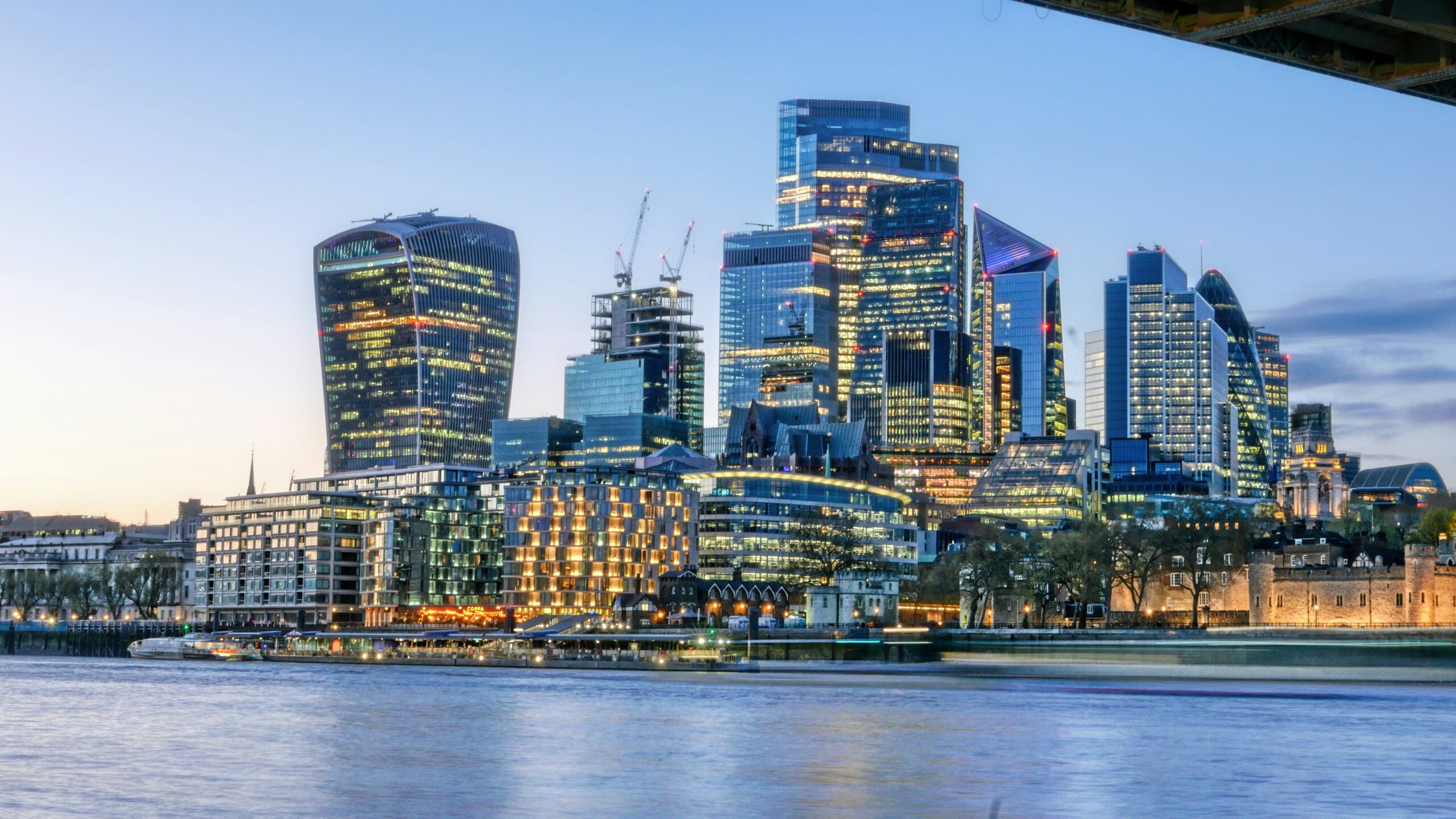
- Report
High growth agencies: what sets the sector’s fastest risers apart?
Our latest report takes a more detailed look at agencies with an average growth rate of over 20%
Read more
- Article
Transformation nation: What the data tells us about Digital and AI Transformation agencies
Our insight into Digital and AI Transformation agencies, drawing on the Agency by Agency Atlas 2026 and its supporting specialism data.
Read more
- Report
The South West: a smaller share of agencies, a bigger share of value
What makes the agency landscape in the South West distinctive?
Read more